
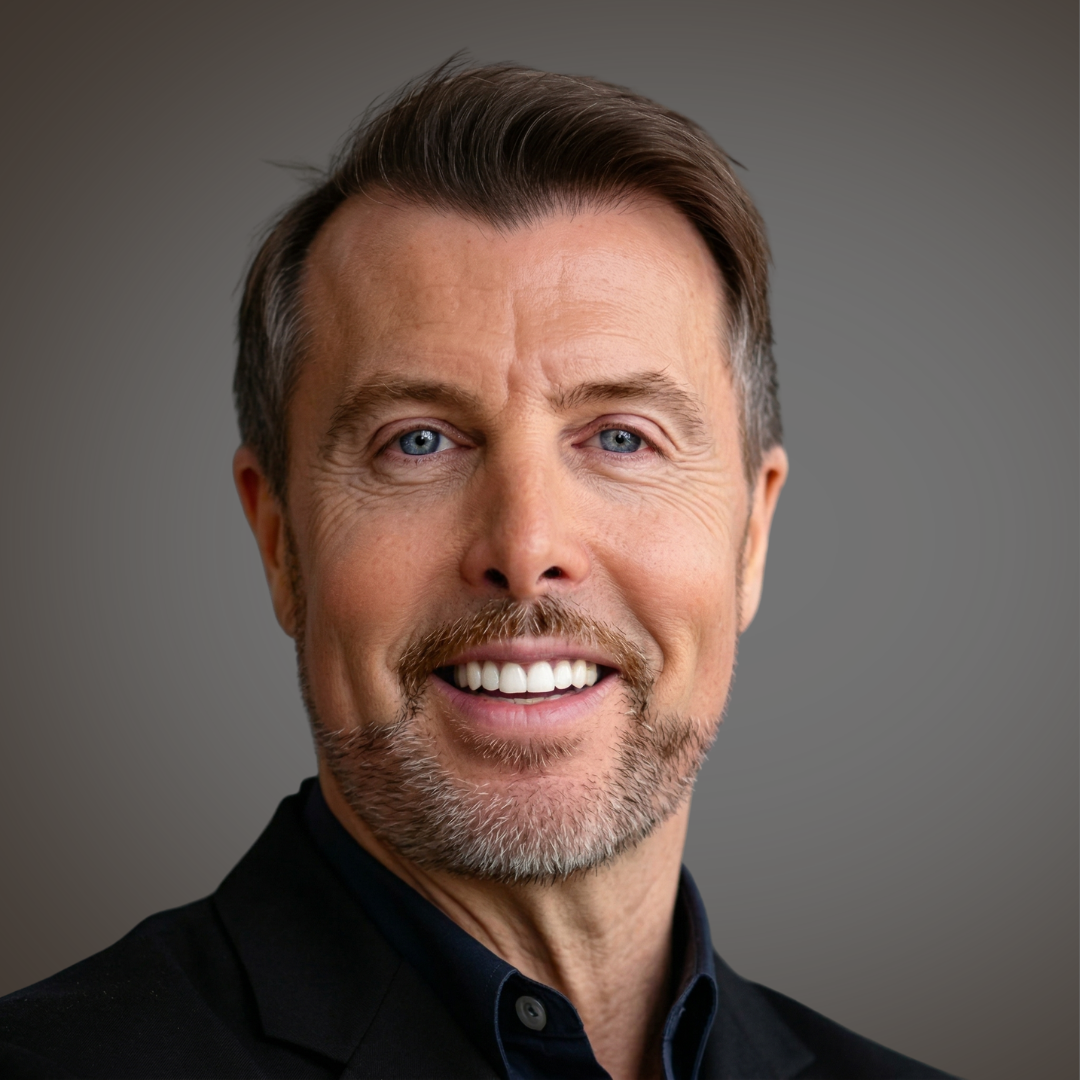

Picture the moment a reassuring thought arrives, and the relief lasts just long enough for the fear to come back before you have even finished forming it. Russell Kennedy MD lived that cycle for years. Cognitive therapy, he says, kept pointing him toward his thinking. Reframe the scary thought. Replace it with a healthier one. And for a while, that worked, briefly. "The body was firing first and the thoughts were simply a downstream explanation, not the cause," Kennedy says of what he eventually came to understand. "No amount of correct THINKING was going to out-argue a body and nervous system that was stuck in ALARMED feeling."
That realization sits at the center of a critique Kennedy brings to how chronic anxiety gets treated. The standard cognitive model positions anxiety as a thinking problem: identify the distorted thought, correct it, feel better. Kennedy's argument is that this framework has the sequence backwards. The alarm is subcortical, seated in structures like the amygdala and insula that process sensation and threat below the level of conscious reasoning. What patients experience as anxious thought, in his view, is the brain's attempt to assign a story to a physiological state that was already running. The frontal cortex, the part of the brain where reframing happens, cannot easily reach down and quiet what is firing underneath it.
The clinical consequence, as Kennedy describes it, is a particular kind of therapeutic stuckness. "Chasing every worry with a better thought keeps you engaged with the mind side of the loop while the body's alarm keeps firing underneath it," he says, "so people spend years reframing thoughts in therapy while the actual alarm never gets addressed." His framing of the core misdiagnosis is precise: cognitive approaches treat anxiety as, in his words, "a thinking problem that feels, when it's actually a feeling problem that thinks."
The alternative Kennedy developed draws on neuroscience, meditation, and somatic experiencing, and it starts not with the mind but with the body. Specifically, with tracking bodily sensation. Where does the alarm actually live in the body? What does it feel like before any explanation gets attached to it? The goal, as he describes it, is to retrain how the body feels fear rather than to think differently about it. In the anxious nervous system, the subcortical insula and amygdala are misreading ordinary sensation as danger, sustaining a somatic loop. Somatic retraining, Kennedy argues, can down-regulate that hyperactivity and address anxiety closer to its actual source.
What that means practically is a shift in therapeutic attention, from the content of worry to the physical location of alarm. Patients who have spent years cataloguing their fears, analyzing their triggers, and constructing more rational narratives about risk are instead asked to notice sensation in the body before trying to explain it away in the mind. The worry loop, in Kennedy's model, persists precisely because the mind keeps engaging with it while the body's signal goes unanswered. Without addressing the body, as he puts it, "the mind just stays stuck in worry loops it can't escape on its own."
The question his framework raises for the broader field is not whether cognitive therapy has value but whether treating thought as the primary target is sustainable for patients whose nervous systems are running an alarm that cognition was never designed to override.
