
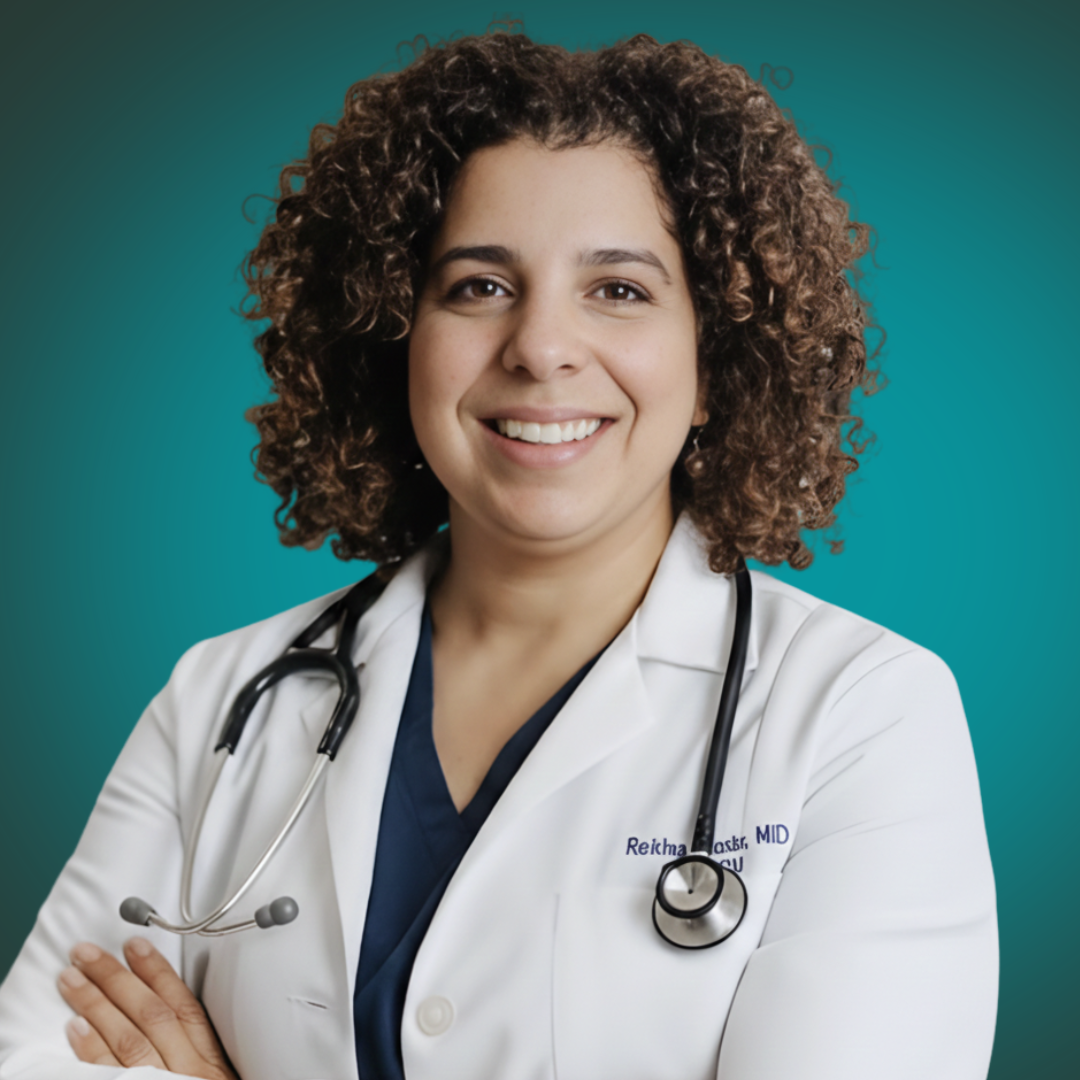

Before she was a physician, Basma Faris, MD, CCMS, OBGYN, Culinary Medicine was a registered dietitian watching something that her colleagues in either field seemed to miss. The relationship between insulin resistance and polycystic ovary syndrome, and what diet actually does to the menstrual cycle, was not yet a standard part of the clinical conversation. Faris was having that conversation anyway. "I was seeing the connection between insulin resistance and PCOS and the impact of nutrition on menstrual cycle long before it was widely recognized," she said. "More importantly I was connecting the dots for my patients when no one else had."
That early vantage point shaped how she thinks about what PCOS care gets wrong at a structural level. The condition, which she now refers to using the emerging term PMOS, sits at the boundary between reproductive medicine and metabolic medicine, a boundary that tends to produce fragmented care rather than coordinated care. Patients end up with multiple providers who are each managing a piece of the picture, and the pieces do not always fit together. "PCOS care is being managed as a series of unrelated issues instead of the chronic condition that it is," Faris said. "Sometimes treatments are not compatible, sometimes important aspects of the condition are overlooked if no one is overseeing care and often times no one is thinking about how to prevent the long term health risks associated with this condition like type 2 diabetes, heart disease and endometrial cancer."
The stakes of that fragmentation are not minor. The long-term risks Faris names, type 2 diabetes, cardiovascular disease, endometrial cancer, are conditions whose trajectories can be altered by early, sustained intervention. But that kind of intervention requires someone who is actually looking at the whole picture across time, which is precisely what a referral-based, specialty-siloed model rarely produces.
Her answer to that structural problem is a virtual practice licensed across 12 states, a model she describes as having advantages that go beyond simple geographic reach. Seeing patients in the context of their actual lives and environments, rather than a clinical exam room, adds a layer of information. And the virtual-only model has changed the referral dynamic in a way that matters practically: her OB/GYN colleagues, she says, are more willing to send patients to her because the arrangement does not risk pulling those patients out of their existing care relationships. "My GYN colleagues feel comfortable referring to me without worrying that their patients will transfer all their care to me," she noted. The result is a practice that functions as a specialist layer on top of existing care rather than a replacement for it.
There is also something Faris describes simply as being able to "nerd out" on PMOS and PCOS. It is a casual phrase, but it points to something with real clinical consequences. A provider whose entire practice is organized around one complex, chronic condition will develop a depth of pattern recognition and protocol refinement that a generalist seeing PCOS as one concern among dozens cannot replicate. Whether that kind of concentration can scale, and what it would take to make it available to the patients who are currently receiving the fragmented version of care, is the question her model quietly poses.
