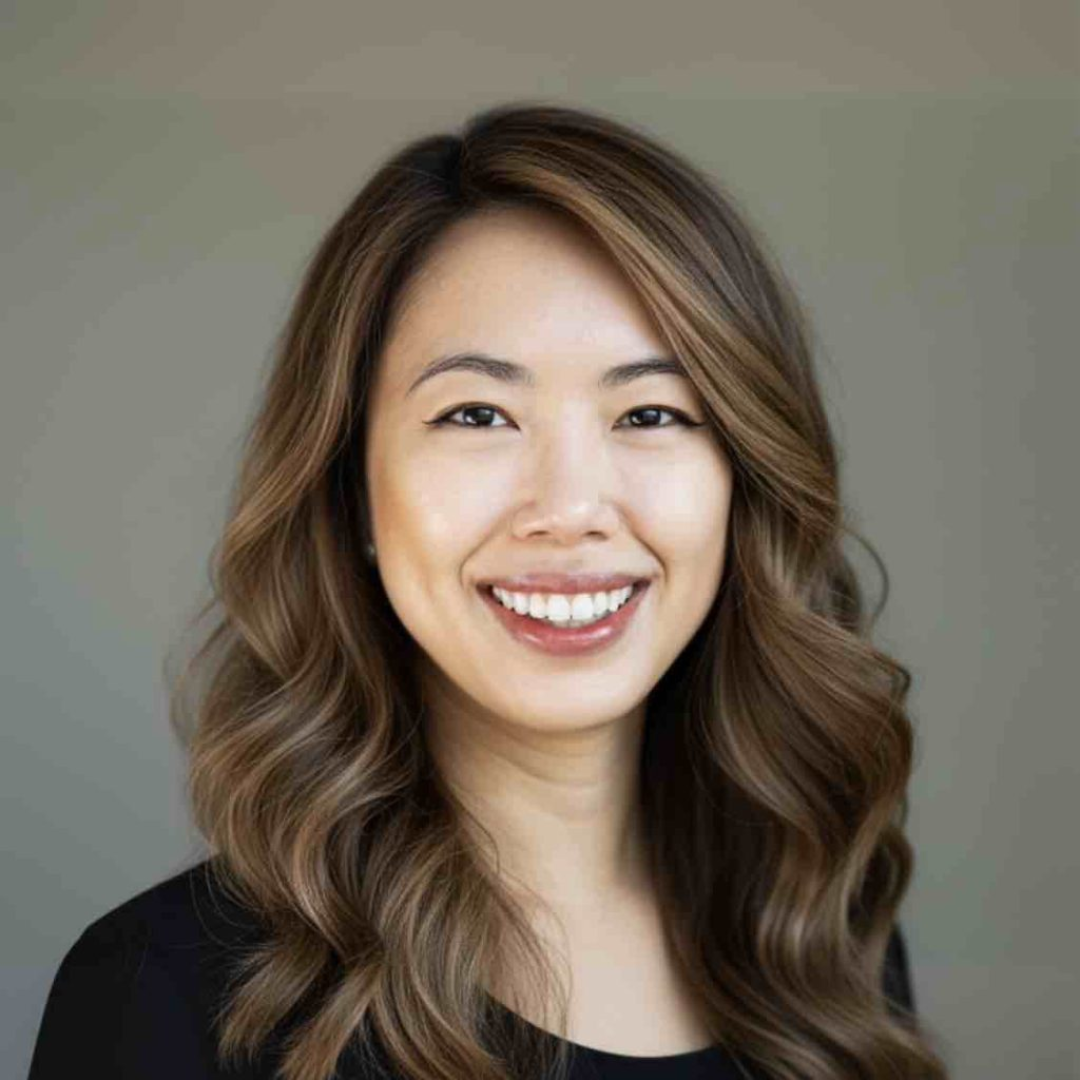

There is a version of a medical career where you see patients, do the work well, and accept that the people you cannot reach are simply beyond your scope. Hillary Lin, MD, found she could not settle into that version. "There's a limit to how many people I can help one at a time," she said. "What bothers me is how much work we make people do just to get decent care." The system, as she describes it, functions reasonably well for people with insider knowledge or well-connected friends. For everyone else, the gap between needing good care and actually getting it is wide enough to matter enormously.
That tension is what pulled her away from conventional internal medicine practice toward building something different. The Stanford-trained physician co-founded two healthtech companies focused on precision medicine and AI-driven patient navigation, working from the premise that clinical expertise becomes far more valuable when it can be scaled beyond the individual exam room. The goal, as she frames it, is not to replace the physician relationship but to make the kind of informed guidance that relationship provides accessible to people who will never have it otherwise.
The first company, Curio, taught her a harder lesson about the distance between what patients need and what they will pay for. "I learned how far apart 'I need this' and 'I'll pay for this' can be," she said. The second venture, CareCore, was designed to work with that reality rather than against it. There, the customers are clinicians who already spend real money trying to solve the problem of ongoing care delivery. The question Lin is now trying to answer is whether CareCore can do it well enough that those clinicians will switch to a new platform, an entirely different kind of proof than patient adoption requires.
Her clinical focus on longevity medicine adds a further complication she seems genuinely unwilling to paper over. The field is moving fast, and the marketing that surrounds it often moves faster than the evidence. "A better lab result doesn't mean you'll live longer or feel better," she said. "What bothers me is when the marketing skips that part." She is careful to say she believes in the field, that the uncertainty alone is not a reason to hold back. But she draws a clear line between enthusiasm and honesty, and she thinks patients deserve to know exactly how much uncertainty they are actually accepting.
"People can decide how much uncertainty they're comfortable with. We just have to be honest about how much there is."
That sentence might be the clearest summary of what Lin is building toward, a model of care where patients are given real information and trusted to use it. Whether the companies she is building can deliver that at scale, and whether clinicians and patients will recognize it as something worth paying for, remains the open question her career is currently betting on.
